Notice when the room changes
Observe the room in daylight, at dusk and after dark. Note where the sun causes glare, where a curtain blocks useful light, and where the ceiling fitting leaves a working surface in shadow. A room that looks bright from the doorway may still be uncomfortable for someone reading in a corner.
Write down the evening activities and their locations. Reading, cooking, conversation and moving through the room have different needs. People also vary in how much light they find comfortable. Ask the people using the space rather than assuming one brightness setting will suit everyone.
Start with existing lamps. Move a portable light to the place where a task happens, provided its cable can reach safely. Clean shades according to their care instructions and check whether an unsuitable bulb is limiting an otherwise useful fitting. Sometimes the most effective improvement is a better position, not another purchase.
Give each layer a job
Ambient light: safe, comfortable movement
This is the general light that makes the room understandable. It may come from a ceiling fitting, reflected light or several distributed lamps. Check routes and changes in floor level instead of judging only the brightest patch.
Task light: a specific activity
A reading or work light should illuminate the task without putting an exposed bright source in your eyes. Adjust it from the actual seated position. For detailed or specialist work, seek task-appropriate guidance.
Accent light: a selected point of interest
A small lamp can bring attention to a wall, shelf or material. Use this layer selectively; highlighting every object removes the hierarchy and can make the room feel restless.
These are jobs, not mandatory shopping categories. One fitting may help with more than one job, and a small room may need only a few well-placed sources. Separate controls are valuable because you can change the balance without making every light brighter or darker together.
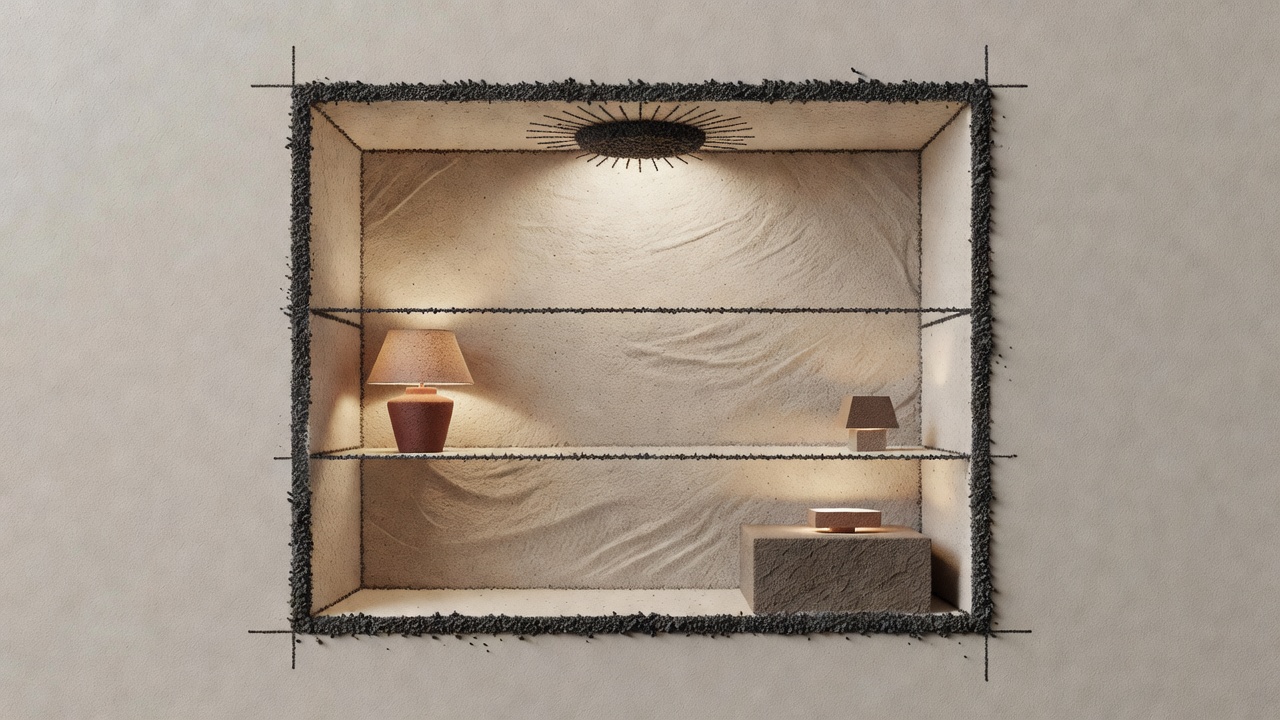
Read the bulb information
Lumens describe light output; watts describe power consumption. Comparing watts alone is not a reliable way to compare the brightness of different lamp technologies. The shade, beam direction, distance and surrounding surfaces also affect how much useful light reaches a task.
Correlated color temperature, expressed in kelvins, describes whether a white light appears warmer or cooler. Around 2700 K is a common warm domestic choice, while 3000 K can appear a little crisper. These are starting points rather than rules. Compare samples in your actual room because materials and personal preference change the result.
Color rendering is a different property. The color rendering index, often shown as CRI or Ra, gives limited information about how a source renders colors against a reference. For art, textiles or color-sensitive tasks, do not rely on color temperature alone. The International Commission on Illumination, known as CIE, and the Illuminating Engineering Society are established technical references for lighting terminology.
Check that a bulb fits the lamp, stays within the fitting’s rating, and is suitable for any enclosure. A dimmable LED needs compatible control equipment; the word “dimmable” does not guarantee compatibility with every existing dimmer. Follow product instructions and ask an electrician when the installed controls are uncertain.
Make comfort and safety part of the plan
Sit in each usual seat and look around. If a bare bulb dominates your view, change the shade, angle or position using a suitable product rather than improvising a cover. Check reflections in televisions, framed glass and shiny tables. Moving a lamp a short distance can solve glare without reducing useful light.
Keep cables away from walking routes, doors, heat and moving furniture. Do not run them under rugs where damage can be concealed. Avoid overloaded sockets and improvised extensions; follow local electrical safety guidance. Electrical installation, alterations and bathroom lighting require appropriate qualified advice and compliance with local rules.
Finally, create two simple settings: an active arrangement for reading or practical tasks, and a quieter arrangement for the end of the evening. These can be ordinary switches, not a connected system. Flexible lighting should make daily life easier, not introduce another piece of technology to manage.